


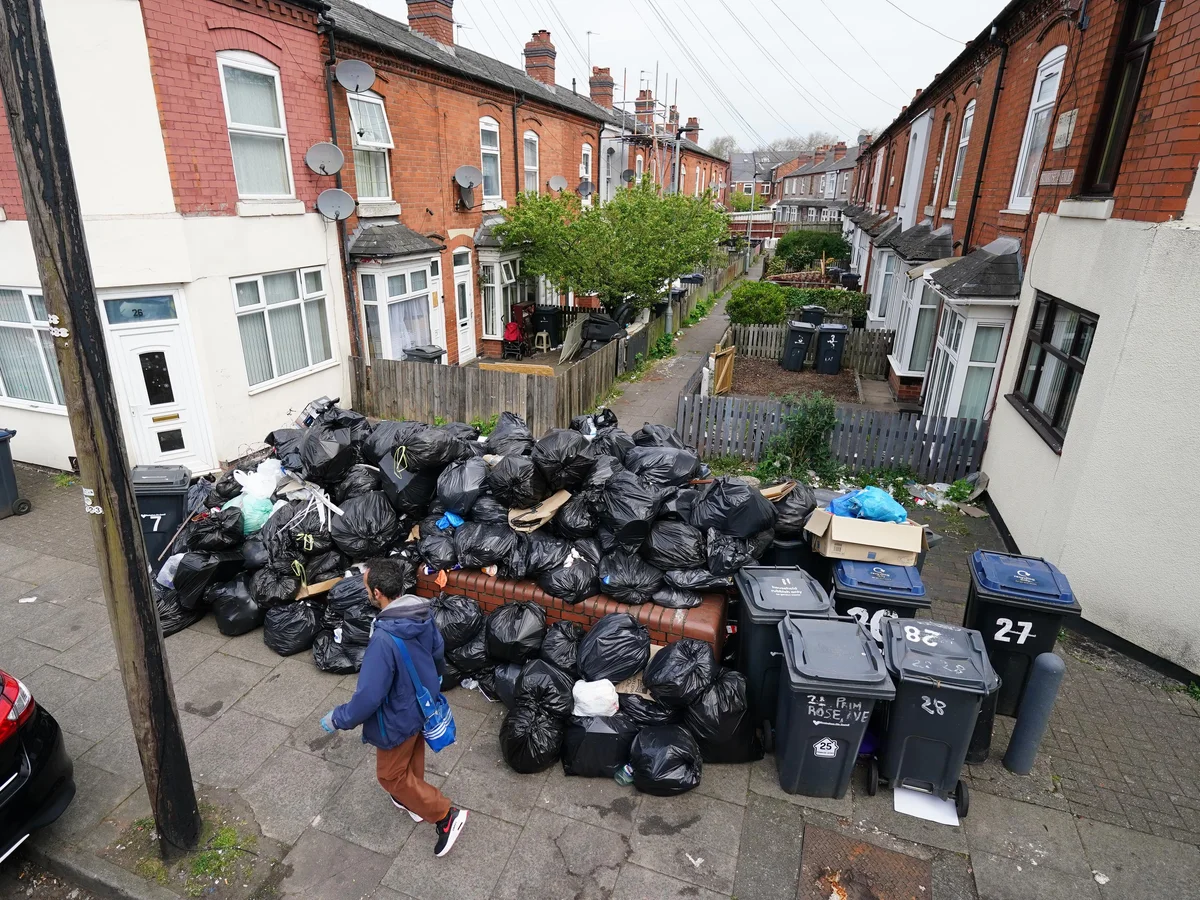
Birmingham’s ongoing bin strike has evolved into a major flashpoint, not only for the UK’s domestic politics but also in the eyes of the international community. What began as a local labor dispute has now spiraled into a public health and governance crisis, drawing widespread attention from media outlets across Europe and beyond. The strike, which has led to an estimated 17,000 tonnes of uncollected waste piling up on the city’s streets, is now accompanied by alarming levels of rat infestations. Reports describe sanitation workers being forced to abandon certain areas due to the presence of unusually large rodents, prompting serious concerns about hygiene and safety.
The international media’s reaction has been swift and pointed. Spain’s Telecinco made headlines with dramatic footage showing military personnel being deployed to assist in particularly hazardous zones, underlining the scale and seriousness of the emergency. Meanwhile, Catalonia’s El Nacional and Libertad Digital explored deeper undercurrents, highlighting how the industrial action is partially tied to ongoing disputes over pay structures—disputes that have been further complicated by gender equality rulings. These rulings, aimed at addressing historical wage imbalances, have inadvertently triggered tensions between different labor groups, sparking further unrest.
French outlets, including Ouest-France and Le Parisien, reported that the issue has now reached the UK Parliament, with lawmakers debating the causes and consequences of Birmingham’s breakdown in basic services. The French press has also raised critical questions about the city’s leadership and management capacity, particularly as Birmingham City Council, currently Labour-led, faces intense scrutiny from both national politicians and local residents.
In Germany, Bild and Der Spiegel drew comparisons between Birmingham’s waste crisis and broader systemic issues within the UK’s public services. They pointed to long-standing financial mismanagement, budget cuts, and underinvestment as root causes not only of the current strike but also of the growing fragility in other areas such as healthcare, transportation, and education. German analysts have also framed the crisis as symptomatic of the post-Brexit strain on local governance, where cities like Birmingham are struggling to meet service delivery demands under tightening fiscal conditions.
Italian media, including Corriere della Sera, took a more politically analytical approach, framing the situation as emblematic of the ongoing power struggle between the Labour-run city council and the Conservative-led central government. The article suggested that while unions and council staff demand better working conditions and pay, the national government is reluctant to intervene directly, preferring instead to let the city’s Labour leadership face the consequences. This dynamic, according to Italian commentators, has deepened polarization and made it harder to reach a resolution.
The scale and depth of international coverage reflect more than just curiosity about an overflowing bin problem—they signal a growing recognition that Birmingham’s crisis is a microcosm of broader challenges facing many cities in the UK and across Europe. It exposes tensions between workers’ rights and austerity-era policies, between local and national governance, and between the ideals of equity and the realities of public service funding.
As the rubbish continues to mount and health experts warn of potential disease outbreaks, public frustration is intensifying. Business owners are reporting losses due to the unpleasant conditions, and residents are taking to social media to express outrage at what they see as political negligence. The political fallout could be significant, not only for Birmingham’s Labour leadership but also for the national debate over how public services are funded, managed, and valued.
In sum, what’s unfolding in Birmingham is more than a sanitation issue—it’s a test of political will, administrative competence, and the social contract between government and citizens. How the crisis is resolved—or fails to be—could have lasting implications for the UK’s domestic politics and its reputation abroad.
Elizabeth
Oww
IDDRISU ABDUL WARIS
Ooh
Samuel Boafoh
International Attention
Erry123
Too bad