


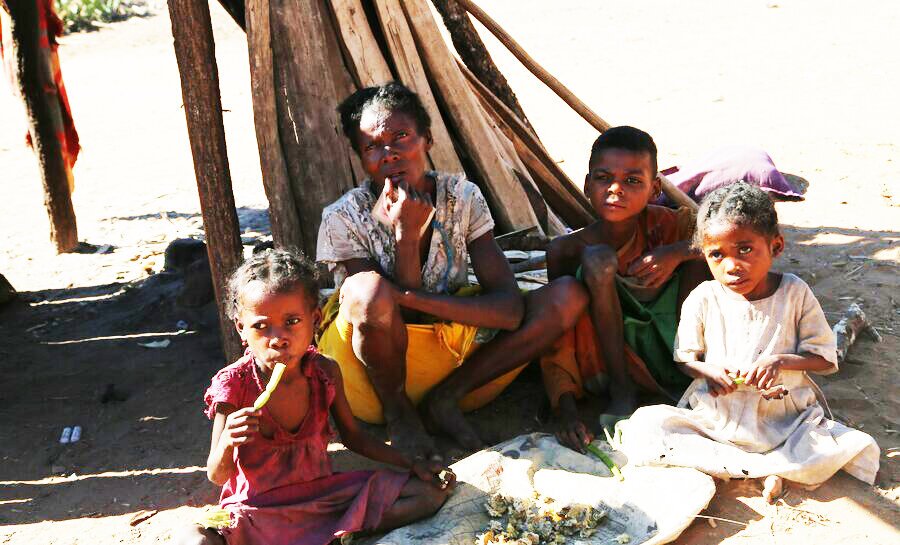
Madagascar, an island nation off the southeastern coast of Africa, is grappling with an escalating hunger crisis that has placed millions of its citizens in peril. Over 80% of the population lives below the poverty line, and the effects of poverty are especially pronounced among children. A staggering one in four young children in Madagascar suffer from chronic malnutrition, which threatens their growth, cognitive development, and overall health.
The country’s already fragile food security situation is being exacerbated by the impacts of climate change. Prolonged droughts, irregular rainfall patterns, and increasingly frequent hurricanes have devastated agricultural production, disrupting food supplies and livelihoods. Madagascar’s largely subsistence-based farming communities are finding it harder to grow enough food, and many people are left without adequate resources to feed themselves or their families.
The hunger crisis is most acute in the southern regions of the island, where famine-like conditions have been reported. In these areas, families are forced to rely on aid to survive, with emergency food programs becoming a lifeline for vulnerable populations. However, despite international relief efforts, the scale of the crisis is overwhelming, and resources remain insufficient to meet the rising demand.
Climate change is also causing the loss of essential natural resources, such as water, which further exacerbates the situation. With agriculture struggling due to unpredictable weather and environmental degradation, the population is increasingly dependent on outside assistance to avoid starvation. The island\'s remote location and lack of infrastructure make it particularly difficult for aid to reach those in need.
International organizations, such as the United Nations and various NGOs, are calling for urgent action to address both the immediate needs of the Malagasy people and the long-term solutions to climate adaptation. Sustainable farming practices, reforestation efforts, and improved access to clean water are among the critical steps needed to prevent further suffering.
The hunger crisis in Madagascar is not just a humanitarian disaster; it is a stark reminder of the deep intersection between poverty, climate change, and global inequality. The world must unite to support the nation in addressing these challenges, as the stakes are nothing short of the survival and future of a nation.
hossman
Ok
KHANDY
Awww
Happy
May God help them
Marena25
Ohh
Suhuyini
Okay