


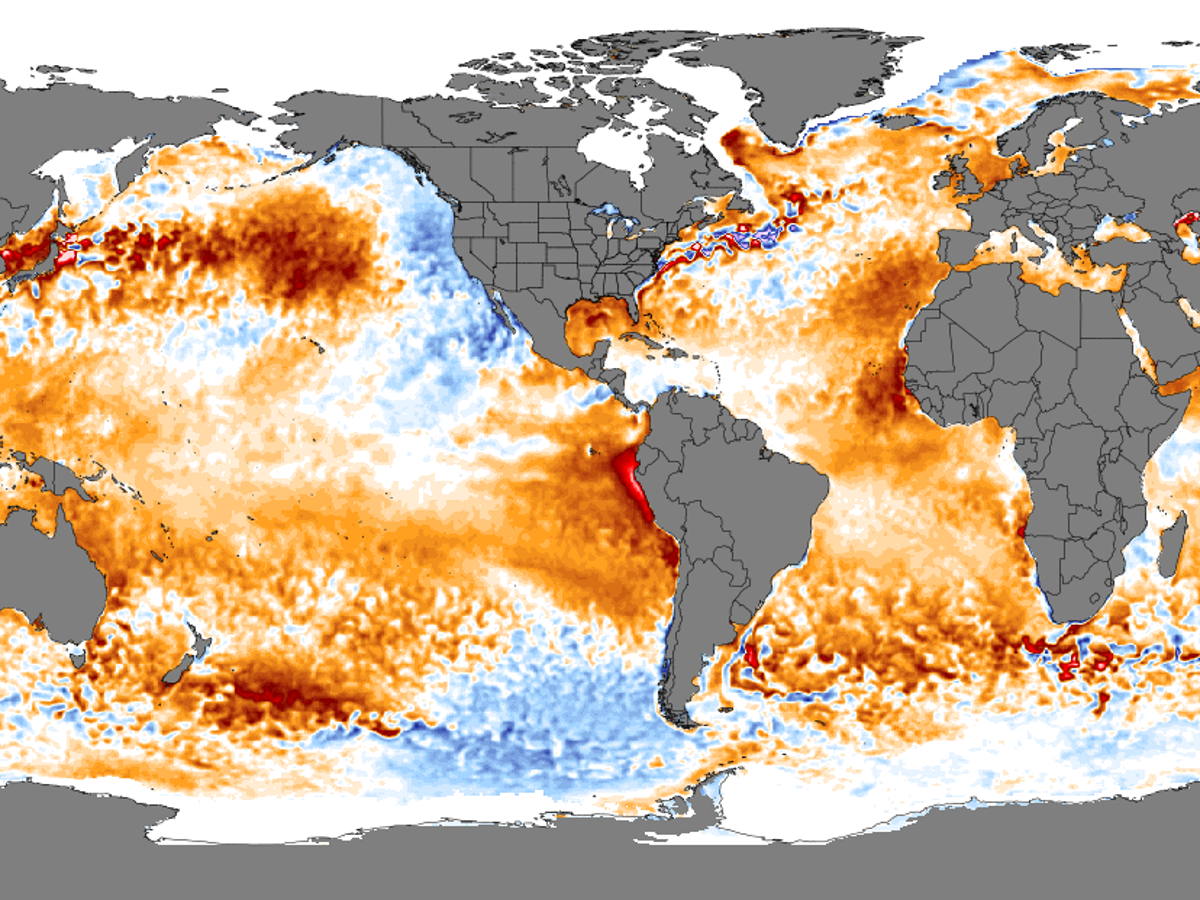
The world’s oceans have reached record-high temperatures in 2025, sounding alarms across the scientific community. According to data from the National Oceanic and Atmospheric Administration (NOAA), global ocean surface temperatures have exceeded all previous records, with some regions measuring several degrees above average. Scientists attribute this surge to a combination of human-induced climate change and intensified El Niño activity, both of which amplify the planet’s heat retention.
The implications are far-reaching. Warmer oceans are known to fuel more powerful and destructive hurricanes and typhoons, increase the rate of polar ice melt, and trigger widespread coral bleaching events. Marine ecosystems are being disrupted as species struggle to adapt to rapid changes in their environment, while fish populations—the foundation of many global food chains—are migrating or declining in critical areas.
Economically, the effects could be severe. Coastal communities that rely on fishing and tourism face uncertainty, and global food supply chains may be impacted by changes in fish availability and marine health. Environmental groups are urging immediate international cooperation to curb carbon emissions and implement protective marine policies. Scientists call for a global expansion of marine protected areas, investment in renewable energy, and stronger climate commitments to avoid irreversible damage.
hossman
Ok
Suhuyini
Okay